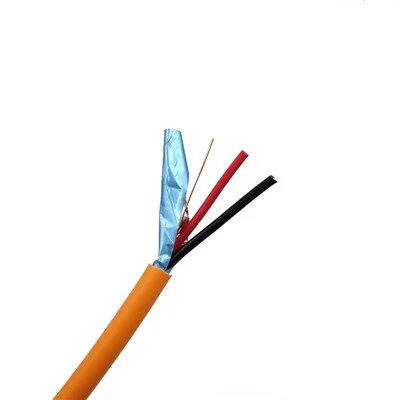
Silicone rubber cables can generally be divided into four main components: the conductor, the insulation layer, the shielding layer, and the sheath.
The conductor is an essential element for the transmission of electric current or electromagnetic wave information. It consists of a conductive core made from non-ferrous metals with excellent electrical conductivity, such as copper or aluminum. In practice, these conductors are often solid or stranded tinned copper wires.
The insulation layer covers the conductor and provides electrical insulation. It ensures that the transmitted current, electromagnetic waves, or light waves remain confined to the conductor-preventing them from leaking outward-while also isolating the electrical potential present on the conductor. In silicone rubber cables, silicone rubber is used as the insulating material.
The shielding layer serves to isolate the electromagnetic fields within the cable from external electromagnetic fields. In some cable designs, it is also necessary to isolate individual wire pairs from one another; in this sense, it acts as an "electromagnetic isolation screen."
The protective layer (or sheath) serves to safeguard the overall structure of the silicone rubber cable-particularly the insulation layer-during installation and operation in various environments. The conductor and the insulation layer are the two fundamental components required for any silicone rubber cable.