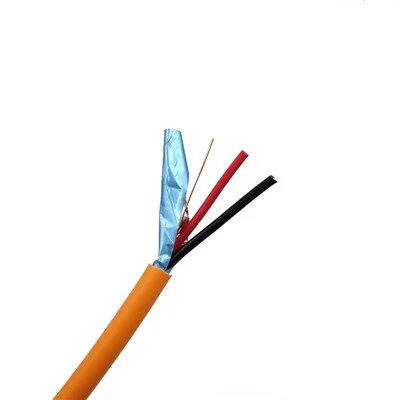
In practical engineering, determining whether a cable is suitable cannot be based solely on the color of its outer jacket; one must focus on two critical technical specifications: conductor cross-sectional area and shielding structure.
Conductor Gauge: To minimize transmission loss, professional speaker cables typically utilize stranded oxygen-free copper (OFC) conductors with gauges ranging from 16 AWG to 10 AWG-or even thicker. In contrast, standard consumer-grade speaker wires may be as thin as 24 AWG or 26 AWG. When driving subwoofers or large-scale speaker arrays, thin cables act like a "drinking straw," causing a significant voltage drop that results in a complete loss of low-frequency (bass) response.
Shielding: In complex electromagnetic environments-such as backstage at a theater-signals are highly susceptible to interference from sources like mobile base stations or high-power electric motors. Professional speaker cables generally feature a dual-shielding design, combining aluminum foil with a braided mesh; they may also incorporate internal insulation between the conductors to prevent crosstalk. Standard speaker wires, however, often consist merely of bare, parallel copper conductors, offering no protection whatsoever.