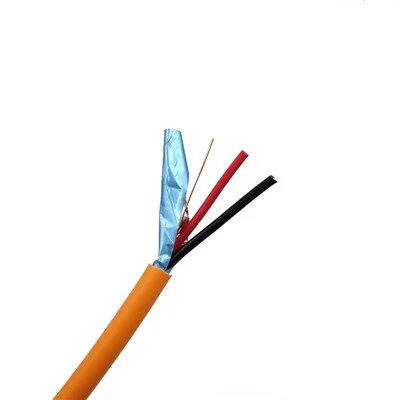
To adapt to various operating environments, control cables incorporate a range of protective measures. For instance, some control cables are designed to be waterproof, making them suitable for damp environments such as hydroelectric power stations or wastewater treatment plants. Their outer sheaths are constructed from materials with excellent water-resistance, effectively preventing moisture ingress and safeguarding the internal conductors and insulation layers.
Other control cables are fire-resistant; in the event of a fire, they help contain the flames and mitigate potential damage. These fire-resistant cables typically feature outer sheaths and insulation layers made from flame-retardant materials, which do not support combustion even at high temperatures-thereby ensuring the safe operation of control systems during emergencies. Furthermore, for environments prone to significant electromagnetic interference, control cables can be equipped with shielding to effectively prevent external electromagnetic disturbances from affecting signal transmission.